




By West Albany Dental
If your dentist has ever recommended a crown instead of a veneer — or vice versa — you may have walked away wondering why. Understanding crowns vs. veneers and why your dentist recommends one over the other in Albany helps you make confident decisions about your smile. At West Albany Dental, Dr. Hannah Glazunov takes time to explain the clinical reasoning behind every recommendation. This article breaks down exactly how that decision gets made.
What Makes Crowns and Veneers Fundamentally Different?
Both crowns and veneers improve the appearance of your teeth. However, they serve very different structural purposes. Understanding those differences is the first step in knowing which one fits your situation.
A dental crown covers the entire visible tooth surface. It wraps around the tooth like a cap, protecting it from all sides. Dentists use crowns when a tooth needs both cosmetic improvement and structural support.
A veneer is a thin porcelain shell bonded only to the front surface of a tooth. It changes how a tooth looks without encasing the whole structure. Veneers work best when the underlying tooth is still healthy and strong.
- Crowns cover 360 degrees of the tooth
- Veneers cover only the visible front surface
- Crowns require more enamel removal during preparation
- Veneers are a minimally invasive cosmetic option
- Crowns restore both function and appearance
- Veneers focus primarily on aesthetics
When Your Albany Dentist Recommends a Crown Over a Veneer
Dr. Glazunov recommends a crown when a tooth has significant structural compromise. This includes teeth that are cracked, broken, or heavily decayed. A veneer simply cannot protect a weakened tooth the way a crown can.
Crowns also follow certain dental procedures as a necessary next step. After Root Canal Treatment Albany patients receive, the treated tooth often becomes brittle. A crown placed over that tooth prevents fracture and extends its lifespan significantly.
Large existing fillings also shift the recommendation toward a crown. When a filling takes up more than half the tooth structure, there is not enough healthy enamel left for a veneer to bond to. In those cases, a crown provides a more secure and durable restoration.
Crowns are also the right choice when a tooth has a significant bite issue. They can handle heavy chewing forces that veneers are not designed to withstand.
When a Veneer Is the Right Clinical Choice
Veneers make the most sense when the tooth itself is structurally sound. If a patient wants to correct discoloration, minor chips, or gaps, a veneer achieves that goal with minimal tooth removal. This makes veneers a conservative cosmetic option for healthy teeth.
Patients who want a smile makeover often benefit most from veneers. Multiple veneers placed across the front teeth can create a dramatically improved, natural-looking smile. Dr. Glazunov evaluates each tooth individually before recommending this approach.
Veneers also work well for teeth that have not responded to whitening treatments. Deep intrinsic staining from medications or developmental issues often resists standard whitening. A veneer covers that staining permanently without affecting the underlying tooth structure.
- Healthy teeth with cosmetic concerns are ideal veneer candidates
- Minor chips, gaps, or shape issues suit veneers well
- Severe staining that does not whiten responds well to veneers
- Patients seeking smile makeovers often choose multiple veneers
- Teeth with sufficient enamel can bond properly to a veneer
The Clinical Factors That Drive the Decision in Albany
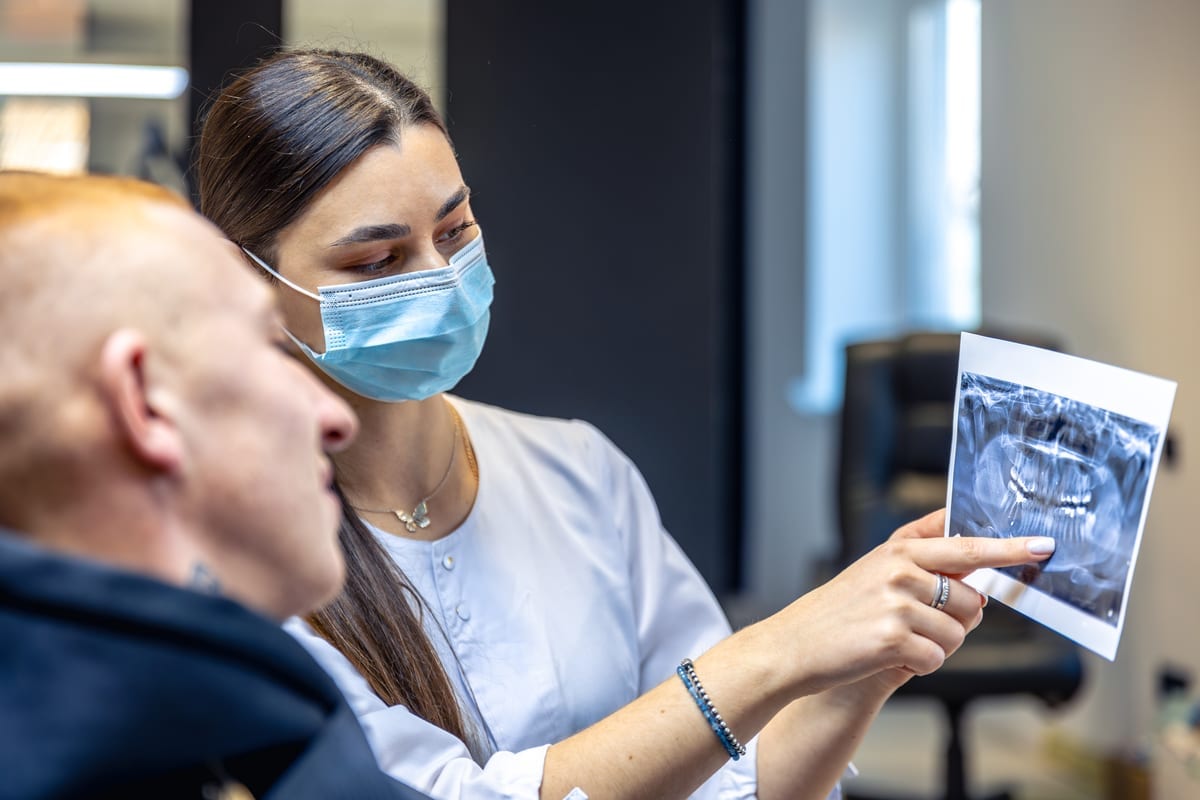
The crown vs. veneer decision in Albany depends on a thorough clinical examination. Dr. Glazunov evaluates X-rays, tooth structure, bite alignment, and gum health before making any recommendation. No two patients present the same clinical picture.
Tooth grinding, known as bruxism, is one factor that strongly favors crowns. Veneers are porcelain and can chip or fracture under repeated grinding pressure. Crowns made from stronger materials hold up better for patients with this habit.
Gum health also plays a role in the decision. Veneers sit at the gum line, so any active gum disease must be treated first. Dr. Glazunov will not place veneers over inflamed or receding gum tissue.
Patients who come in for Emergency Dentist Albany visits with a broken tooth often need a crown rather than a veneer. Trauma that fractures a significant portion of the tooth changes the entire treatment approach. The clinical goal shifts from cosmetics to stabilization and protection.
How Dr. Glazunov Personalizes Your Treatment Plan
At West Albany Dental, no recommendation comes without explanation. Dr. Glazunov walks every patient through the reasoning behind the chosen treatment. You will understand exactly why one option fits your situation better than the other.
Sometimes both treatments work together. A patient may receive crowns on damaged back teeth and veneers on healthy front teeth as part of a comprehensive smile makeover. The two treatments complement each other when planned carefully.
The goal is always to preserve as much natural tooth structure as possible. Crowns are recommended only when the clinical situation requires them. Veneers are used when they can achieve the same result with less intervention.
Albany patients deserve treatment plans built on clinical evidence, not convenience. Dr. Glazunov’s approach prioritizes your long-term oral health over a quick fix. That philosophy guides every crown and veneer recommendation made at this practice.
Conclusion
Choosing between a crown and a veneer is not a cosmetic preference — it is a clinical decision. Dr. Hannah Glazunov at West Albany Dental evaluates your unique situation carefully before making any recommendation. Whether you need structural protection or a cosmetic upgrade, the right treatment exists for your specific needs. Book Now to schedule your appointment with our team.
Frequently Asked Questions
Can a veneer replace a crown if I want a less invasive option?
Not always. Veneers only cover the front surface of a tooth. If your tooth is cracked, heavily decayed, or weakened after a root canal, a crown is clinically necessary. A veneer cannot provide the structural protection that a compromised tooth needs.
Do crowns look as natural as veneers?
Yes. Modern dental crowns are made from tooth-colored materials like porcelain or zirconia. They are designed to match the shade and shape of your surrounding teeth. Most people cannot tell the difference between a well-made crown and a natural tooth.
How long do crowns and veneers last?
Dental crowns typically last 10 to 15 years or longer with proper care. Veneers generally last 10 to 12 years. Both restorations benefit from regular dental checkups, good brushing habits, and avoiding habits like nail biting or teeth grinding.
Is the procedure for a crown more uncomfortable than for a veneer?
Both procedures are performed under local anesthesia, so discomfort during treatment is minimal. Crowns require more tooth preparation because the entire tooth surface is shaped. Some patients experience mild sensitivity after either procedure, but this typically fades within a few days.
What should I do if my crown or veneer chips or breaks?
Contact West Albany Dental as soon as possible. A chipped or broken restoration can expose the underlying tooth to damage or decay. Prompt care helps protect the tooth and keeps your restoration functioning correctly.